
Family Caregiver Burnout: How to Protect Your Health

Introduction

When we talk about mental health, much of the focus is often on the person experiencing illness or difficulty. However, there is an equally important but often overlooked group that carries invisible weight every day: caregivers. Whether it’s caring for a parent with dementia, helping a child with a developmental disorder, or being present for a partner with chronic illness, caregiving is both an act of love and an immense responsibility. Even informal caregiver roles, like supporting a friend’s mental health journey, demand emotional and physical energy.


Beneath the surface of resilience and commitment, a caregiver silently carries exhaustion, anxiety, and burnout.

The Landscape of Caregiving

Who are Caregivers?

A caregiver is anyone who provides consistent assistance, either physical or emotional, to another person who is unable to manage on their own. Caregiving can take many forms:

  • Parents of children with special needs.
  • Adult children caring for ageing parents.

  • Spouses supporting partners with chronic or terminal illnesses.

  • Friends or siblings helping loved ones cope with mental health conditions.

Globally, millions of people provide unpaid care to their loved ones. In India alone, informal caregivers—primarily family members—form the backbone of the healthcare system. With limited professional caregiving support and cultural expectations that prioritise family above all, caregiving responsibilities often fall heavily on one or two individuals.

“A caregiver’s tasks extend beyond physical care – administering medication, helping with daily routines, managing hospital visits – to emotional and financial responsibilities.”

Indian Caregiving Landscape

Informal caregivers here are most often family members, parents, spouses, and adult children, who juggle household responsibilities and professional life with the pressures of continuous care. For those caring for elderly relatives, children with disabilities, or people with chronic mental illness, the burden is amplified by socioeconomic constraints and cultural expectations.

In India, up to 240 million people are estimated to live with mental illness, resulting in a massive number of informal family caregivers – including spouses, parents, siblings, extended relatives, and close friends. Families remain the central pillar of support for those affected. When caring for individuals with common mental disorders, tasks are usually less demanding, as many patients remain somewhat independent, acknowledge their condition, and cooperate with treatment. However, the challenges intensify for family members supporting someone with a severe mental illness—often marked by denial of the illness, resistance to treatment, and difficulty in medication adherence. The onset of a severe mental illness can profoundly disrupt family life, bringing about lifestyle changes, confusion, and emotional upheaval.

Caregivers frequently sacrifice their own hobbies and personal time, leading to feelings of neglect among other family members and concerns about possible violence. This often results in burnout and social isolation, as daily workloads leave little time for self-care and routine responsibilities.

Anybody can be a caregiver

Understanding their Psychological Challenges

Caregiving demands time, patience, and emotional strength. Over prolonged periods, this can lead to:


Emotional Strain:

Caregivers often feel guilty for not “doing enough,” angry at the situation, or helpless in the face of circumstances beyond their control. Suppression of these feelings can lead to chronic stress.


Anxiety and Depression:

When a caregiver constantly worries about medical appointments, emergencies, or future uncertainties, anxiety becomes a daily reality. Coupled with social withdrawal, reduced self-care, and exhaustion, depression risk increases drastically.


Identity Loss:

Many caregivers lose sight of their own personal goals, hobbies, and family or social roles. Their identities gradually shrink to being defined only as “the caregiver.”

Financial Stress:

Long-term care situations can impact income (especially if a caregiver reduces working hours or quits a job), adding to mental strain.


Mental strain can show up as depression, anxiety, fatigue, burnout, and loss of personal identity. Most strikingly, high caregiving hours, younger care recipients, and severe disability sharply increase caregiver risk.

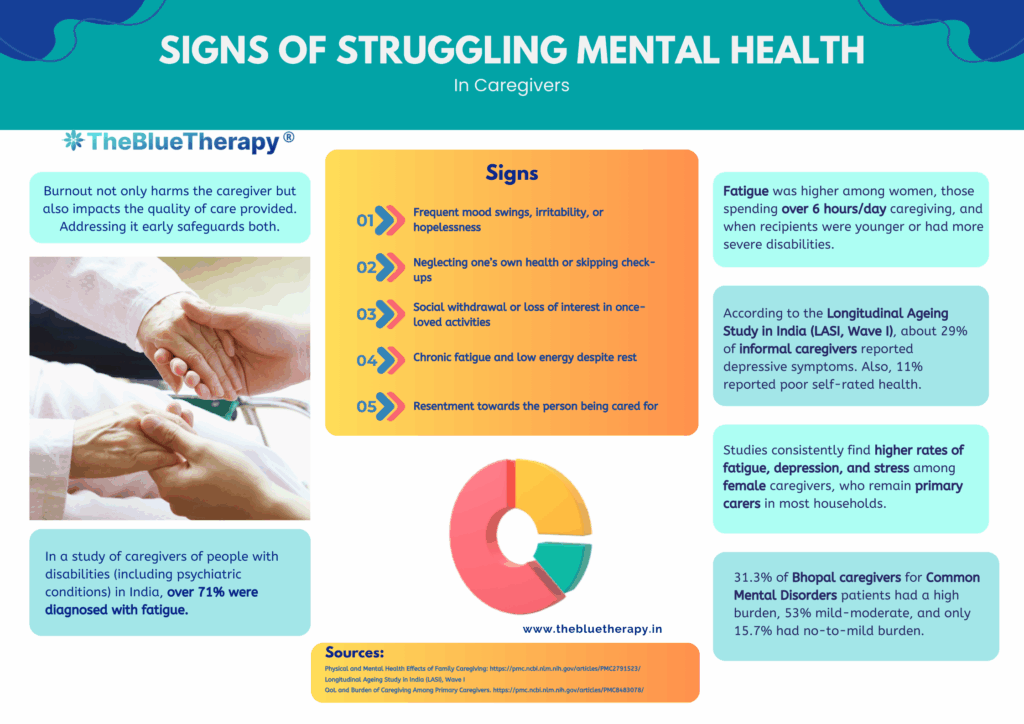
Signs of Struggling Mental Health in Caregivers

Signs and Statistics on Struggling Mental Health in Caregivers

 If several of these symptoms appear consistently, it’s a strong indication that a caregiver may need support or intervention.

Why Do Caregivers Find it Difficult to Reach Out for Help?


Despite the clear strain, caregivers often struggle to seek help. It could be because of the following:

  • In collectivistic cultures, such as India, caring for family is seen as a duty, not a choice. Admitting struggle may feel like a weakness or a betrayal.
  • Between caregiving and other responsibilities, there’s hardly any time left for seeking support, exercising or even getting basic rest.
  • Many caregivers fear being judged for expressing frustration or needing support.

Myths vs Facts about Caregiving

  • It’s my duty, I shouldn’t complain.”
    Caregiving may be a family responsibility, but acknowledging stress is not complaining—it’s a natural part of being human.
  • “Self-care is selfish.”
    Caring for your body and mind does not diminish your compassion, making caregiving a more sustainable experience. Higher family support and self-care are protective, decreasing feelings of burden and improving quality of life.
  • “Asking for help means failure.”
    Accepting support doesn’t mean you’re incapable. It reflects strength to recognise limits.

Practical Strategies for Caregivers Self-Care

  • Create a Routine That Includes “You”: Structure daily schedules to guarantee at least one dedicated slot for personal interests, relaxation, or mindful breathing—even just 10 minutes anchors the day.
  • Accept and Delegate Help: Instead of attempting everything alone, make a list of tasks others can do and accept support when offered. Delegate errands, meal preparation, or short periods of direct care to share the load.
  • Join Caregiver Support Groups: Online or in-person groups provide emotional validation, advice, and opportunities for social connection. Peer support is proven to reduce stress and feelings of isolation.
  • Build a Sustainable Self-Care Routine: Caregiving works best when you’re cared for too. Carve out small moments in the day for yourself, maintain steady sleep and meals, and be gentle with your limits. A little rest and compassion go a long way in making the role sustainable.
  • Professional Help: Therapy or caregiver support groups provide safe spaces to share struggles, gain perspective, and learn coping strategies. Mental health professionals can also help caregivers manage guilt and stress effectively.

Conclusion

Caregiving doesn’t have to mean “do everything yourself.” A shift in mindset from one person shouldering all responsibility to a shared community care can make a massive difference. When caregivers are supported, they are better able to provide the care their loved ones deserve, and in the process, they reclaim their own sense of balance, identity, and peace. Just as aeroplanes instruct passengers to put on their own oxygen masks before helping others, caregivers need to take care of themselves first to sustain care for others. 


Caregiver mental health must be discussed openly, supported consistently, and prioritised just as much as the person receiving care.

~~

If you are a caregiver struggling with stress, fatigue, or overwhelm, remember—you are not alone. At The Blue Therapy, we believe that caregivers deserve the same attention, empathy, and dedicated spaces for healing as those they care for.

You may also Like

Family Caregiver Burnout: How to Protect Your Health

Explore caregiver mental health, common stressors, burnout signs, and practical self-care tips to support well-being while caring for others...

Build Healthy Habits for Better Mental Health

Through consistent choices, we nurture our bodies with exercise, vitality through nutrition, and peace through mindfulness. Here are 8 healthy habits for creating a better Mental Health...

Anxiety Relief Through Grounding: What You Need to Know

Unearth the essence of grounding and its anxiety-relieving benefits. Dive into our blog for insights on this powerful coping technique...
Scroll to Top